Service Hotline






Product Introduction
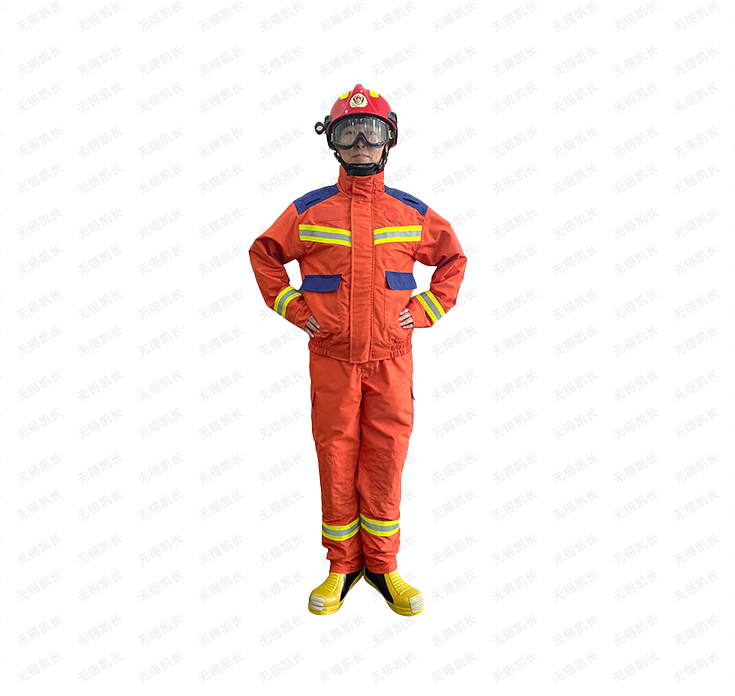
Emergency rescue suits are mainly made of single or multiple layers of composite fabrics, emphasizing the combination of functionality and lightness. Modern rescue suits mostly adopt a split structure (upper garment and trousers), and the easily worn parts such as shoulders, elbows, buttocks and knees are thickened and reinforced to cope with complex rescue environments. To adapt to different seasons, it is usually divided into summer and winter styles: the summer style focuses on moisture absorption, quick drying and breathability, while the winter style adopts a three-layer structure to enhance warmth retention and protective performance. The product complies with the requirements of the XF 633-2006 "Firefighter Rescue Protective Clothing" standard, and a complete and valid entrusted inspection report of the product is provided.
Product features
This firefighter's rescue protective suit integrates physical protection, comfort and functional design. In terms of physical protection, the fabric features excellent flame retardancy and high-temperature resistance. It self-extinguishes when exposed to fire without dripping. At the same time, it has high strength and anti-static properties, effectively resisting the hooking and wear of sharp objects. In terms of wearing experience, the use of lightweight materials reduces the overall weight of the garment by over 40%, triples the breathability to keep it dry, and ensures smooth and flexible large-scale movements through underarm ventilation holes and three-dimensional cutting. In terms of functional details, the high-brightness reflective tape ensures high visibility in dark environments. The multi-pocket layout makes it convenient to carry tools. Designs such as the stand-up collar and leather cuffs further enhance the protective fit.
Applicable scenarios
Emergency rescue suits are mainly applicable to various emergency rescue sites that are not directly threatened by flames, specifically including:
Rescue operations for building collapse and subsidence accidents;
Handling of vehicle accidents and equipment accidents;
Rescue operations for accidents in narrow Spaces, tunnels and ditches;
Climbing and general rope operations.
It should be noted that rescue suits cannot replace fire-fighting protective suits when entering fire scenes directly burned by flames, nor can they replace chemical protective suits in incidents of hazardous chemical leakage.





Follow Us
Copyright © 2026 Wuxi Changkai Chang Technology Co., Ltd
苏ICP备13014294号-1
 苏公网安备32028102004059号